
Does your engine rev unusually high during gear changes—but your vehicle doesn’t accelerate as expected? This is a common sign of transmission slipping, an issue that can lead to serious problems if left unaddressed. Whether you drive an automatic, CVT, or manual transmission vehicle, it’s critical to understand what this behavior means and how to fix it.
In this guide, we’ll explain the causes of high engine RPM during gear shifts, how to diagnose the issue, and what steps you can take to restore your transmission’s performance and reliability.
Transmission slipping occurs when your car changes gears but doesn’t respond appropriately. You may notice that:
This disconnect between engine output and vehicle movement is not normal. It indicates that your transmission is struggling to transfer power to the wheels.
Here are some telltale signs that your transmission is slipping or underperforming:
The tachometer climbs rapidly, but your vehicle lags behind. This is especially noticeable when merging onto highways or climbing hills.
You may feel a pause or jerk during gear changes, especially when going from park to drive, or between low and high gears.
Even when pressing the accelerator, your car doesn’t respond with the expected power. This can be dangerous during overtaking or uphill driving.
A hot, burning odor may indicate overheating transmission fluid—often a result of slipping.
Many modern vehicles will trigger a Check Engine or Transmission Light if slipping occurs frequently or severely.
In some cases, the vehicle may fail to move forward or backward even after selecting the appropriate gear.
Several mechanical and electrical issues can lead to this problem. Understanding the most common causes can help you identify the right solution faster.
Transmission fluid is essential for proper gear engagement, cooling, and lubrication. When fluid is old, burnt, or leaking, it loses its ability to maintain hydraulic pressure—resulting in slipping and over-revving.
Symptoms:
Pro Tip: Check fluid levels regularly and inspect for leaks under the car.
In manual vehicles, the clutch disc can wear over time and fail to engage fully. This results in RPM surges with poor vehicle response, especially when shifting from a standstill or into higher gears.
Symptoms:
Transmission bands help link the gear sets together. If they’re worn or stretched, they can’t hold gears properly—leading to slipping during shifts.
Symptoms:
The torque converter is responsible for transferring engine power to the transmission. If it’s failing, it may cause:
The TCM monitors and manages gear shifting in modern automatic and CVT systems. A malfunctioning TCM can confuse gear timing, leading to erratic RPM behavior and delayed engagement.
Common fault codes: P0700, P0730, P0868
A clogged transmission filter can restrict fluid flow, reduce hydraulic pressure, and overheat the system—leading to gear slippage and poor shifting performance.
Recommendation: Replace your filter as part of routine transmission service.
To properly identify the cause of high RPMs during shifting, a systematic approach is needed. Here’s how transmission professionals, like those at Mister Transmission, diagnose the issue.
✅ Step 1: Road Test
A technician will drive the vehicle to observe:
✅ Step 2: Transmission Fluid Inspection
They’ll check:
✅ Step 3: Computer Diagnostics
Using a scanner, they’ll retrieve any transmission-related fault codes, analyze sensor data, and check the TCM for errors.
✅ Step 4: Visual and Component Inspection
The technician may examine:
Depending on the root cause, repairs can range from simple fluid changes to full transmission rebuilds. Here are some common fixes:
This is often the first (and cheapest) step. Replacing old fluid and a clogged filter can restore pressure and gear engagement.
When it works:
If your clutch is slipping, replacing it is necessary. This usually includes:
If damaged, a torque converter can’t transfer power efficiently. It may need to be replaced if slipping occurs at low speeds or while idling.
In automatic transmissions, solenoids control fluid flow for gear shifts. If one fails, it may cause erratic or delayed shifts and high RPMs.
Sometimes, a software update can correct TCM-related timing issues. In more severe cases, the module may need to be replaced.
If multiple components are worn, a full rebuild or replacement may be the most cost-effective long-term fix. This involves:
Proactive care is the best way to avoid high RPMs and gear issues. Here’s how to protect your transmission:
✅ Change Fluid Regularly
Follow the manufacturer’s recommendations—usually every 50,000 to 100,000 km depending on your vehicle and driving style.
✅ Avoid Overloading and Overheating
Towing heavy loads or driving in extreme heat can strain your transmission. Consider adding a transmission cooler if you tow regularly.
✅ Pay Attention to Early Warning Signs
Slipping, revving, and delayed engagement are all reasons to get your transmission checked ASAP.
✅ Annual Transmission Inspections
Have your transmission inspected at least once a year by a trusted specialist to catch small problems before they become big repairs.
Is your vehicle revving too high during shifts? Are you noticing slipping, delayed acceleration, or a burning smell from under the hood?
Let the certified technicians at Mister Transmission perform a free road test and multi-point inspection to get to the bottom of your transmission trouble.
Schedule Your Inspection Today
Final Thoughts
When your engine revs high but your car doesn’t respond as it should, don’t wait—it’s likely a sign of transmission slipping. From fluid issues to electronic malfunctions or internal wear, a slipping transmission can quickly evolve into a major repair if not addressed promptly.
By learning the signs, causes, and solutions, and working with experienced professionals like those at Mister Transmission, you can ensure your vehicle stays safe, efficient, and responsive on the road
To book a free road test and multi-check inspection, you use the Mister Transmission Finder to connect with a transmission expert near you
It can be hard for the average driver to accurately spot problems they’re having with their vehicle.
Identifying gears slipping in your vehicle’s transmission can be tricky. Read our tips to help you recognize the signs of slipping gears. Read More
Modern manual and automatic transmissions are complex machines. With that intricacy comes the possibility for a number of transmission problems to arise over time.
Read on to learn some of the more common transmission problems your vehicle may experience on the road. Read More
Clunking, whining, buzzing, growling, grinding, or humming sounds coming from your transmission are all serious cause for concern.
Mister Transmission has been helping Canadians diagnose transmission sounds and performance issues to keep business fleets, commuter vehicles, and track-stars in shape, and we can do the same for you. Read More
A burning smell in your car could indicate serious transmission trouble.
It could be burning transmission fluid you’re smelling, and it’s one of the major warning signs that your vehicle’s transmission may be overheating. Read More
Transmission fluid changes are an essential part of your routine servicing. They keep your vehicle running smoothly and performing at its peak.
Let’s learn more about the importance of transmission fluid changes, why they need to happen, and how they are done. Read More



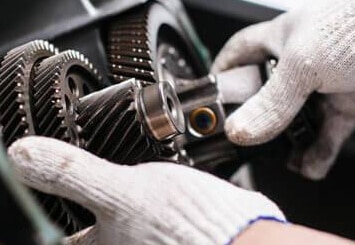
The evolution of transmissions has made these machines and systems increasingly complex. When transmission repairs are required, determining the cause and cure for what ails can be tricky.
Read More
At Mister Transmission we have access to leading-edge diagnostic equipment, enabling us to offer you the fastest and most accurate findings about what’s going on inside your vehicle’s transmission.
Read More
Just as you have other parts of your car serviced, your transmission needs maintenance to ensure a long life and avoid transmission problems.
Read More