

Transmission problems are rarely sudden. Most failures develop quietly — slipping gears, fluid degradation, sensor faults — long before a driver notices. By then, the repair cost has often multiplied.
For vehicle owners across Canada, from Ontario and Alberta to British Columbia and Quebec, the challenge isn’t just fixing a transmission when it fails. It’s catching the problem early enough that a minor service doesn’t become a full rebuild. That difference comes down to diagnostic quality.
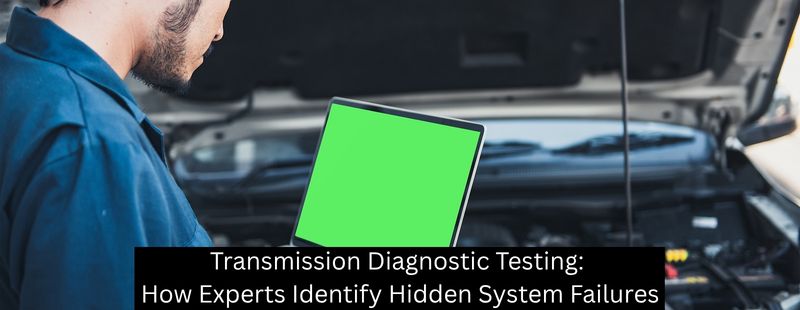
Transmission diagnostic testing is a structured, multi-stage assessment certified technicians use to identify both obvious faults and hidden failures. It involves scanning the vehicle’s on-board computer, a live road test, and a hands-on mechanical inspection — each stage building on the last.
Since 1963, Mister Transmission has been Canada’s most trusted name in transmission repair. With coast-to-coast locations and a 4.8-star rating from over 14,000 reviews, Mister Transmission brings the diagnostic expertise vehicle owners and fleet operators count on.
Modern transmissions — automatic and CVT units especially — are governed by sophisticated electronic systems. Shift points, hydraulic pressure, torque converter engagement, and fluid temperature are all managed by the transmission control module (TCM), which communicates constantly with the engine control unit.
When a component begins to fail, the TCM often compensates automatically, adapting shift behaviour to mask the problem. To the driver, nothing feels wrong — but internally, deterioration compounds with every kilometre.
This is why faults go undetected until damage is already significant. Without a scan reading live sensor data and fault codes, there’s no reliable way to know what’s happening.
Transmission diagnostic testing isn’t a single check — it’s a layered process. Each stage produces information that shapes the next, giving technicians a complete picture of system health.
The first step is connecting diagnostic equipment to the vehicle’s on-board computer. This scan reads diagnostic trouble codes (DTCs) stored in the TCM, identifying which sensors or circuits have flagged a fault. Technicians interpret these codes alongside shift timing, fluid temperature, gear ratio outputs, and shaft speed readings.
At Mister Transmission, leading-edge diagnostic equipment communicates directly with each vehicle’s computer systems to produce accurate, vehicle-specific findings — not generic estimates.
A computer scan shows what codes are stored. A road test reveals what’s actually happening — shift quality, clutch engagement, torque converter lock-up, and throttle response all monitored live through real driving conditions.
This stage catches intermittent problems that don’t trigger stored codes. A transmission slipping only under highway load, for example, would never surface through a stationary scan.
Technology narrows the field. A physical inspection confirms the diagnosis and identifies issues sensors don’t measure. Technicians examine fluid condition, check for leaks, inspect the pan for debris or clutch material, and assess solenoids, gaskets, and linkage components.
Mister Transmission’s free Road Test & Multi-Check brings all three stages together — providing a complete baseline assessment before any repair decisions are made.
Not every transmission failure announces itself dramatically. Some of the most costly faults only appear as patterns under diagnostic scrutiny:
Catching these early is the difference between a fluid service and a full transmission rebuild.
Different transmission types present differently under diagnostics — and that distinction is part of what separates a specialist from a general repair shop.
Automatic transmissions rely heavily on electronic control. Fault codes are a starting point, but live pressure data and shift timing analysis are equally important. Manual transmissions are less electronically monitored — diagnostics depend more on the road test, with technicians assessing clutch condition, syncromesh wear, and linkage play.
CVT transmissions require specific knowledge of belt and chain tension, variator wear, and ratio control. Standard codes may not capture the full picture. Mister Transmission services all three types with technicians trained to apply the right diagnostic approach for each.
For businesses running fleets in Manitoba, Saskatchewan, Nova Scotia, and across the country, an unexpected transmission failure isn’t just a repair bill — it’s a vehicle off the road, a missed delivery, a crew that can’t reach the job site.
Mister Transmission’s fleet services program addresses this directly. Maintenance schedules are managed proactively, with diagnostic checks structured to catch deterioration before it becomes downtime. Fleet customers coast to coast rely on Mister Transmission for accurate findings and long-lasting repairs.
Discover how Mister Transmission’s technical diagnostics service delivers the most accurate starting point — connecting directly to your vehicle’s computer systems for fast, precise findings.
Learn how Mister Transmission’s transmission repair services cover automatic, manual, and CVT systems, with technicians trained across the full range of vehicle makes nationwide.
Find out how Mister Transmission’s fleet services program helps businesses maintain proactive maintenance schedules and keep vehicles on the road coast to coast.
Transmission diagnostic testing is a multi-stage process identifying faults in a vehicle’s transmission system. It begins with an on-board computer scan for stored fault codes, moves into a live road test monitoring shift behaviour, and concludes with a physical inspection of fluid, mechanical components, and external systems.
Yes — and this is critical. The TCM often compensates for developing faults, preventing a warning light while damage accumulates. Intermittent faults, pressure irregularities, and fluid degradation rarely produce dashboard warnings. A diagnostic scan and road test detect these long before visible symptoms appear.
CVTs require knowledge beyond standard fault code interpretation — technicians assess belt or chain tension, variator wear, and ratio control systems that don’t always generate clear codes. Automatics rely more on shift timing and solenoid performance data. Both require experienced interpretation for an accurate diagnosis.
For commercial fleets across Ontario, Alberta, or Atlantic Canada, diagnostic checks should sit within preventive maintenance schedules — typically every 40,000 to 50,000 kilometres. High-use vehicles in stop-and-go conditions may need more frequent assessments. Scheduled diagnostics significantly reduce the risk of unexpected failures.
No. A diagnostic gives you the information to decide — not an obligation to repair. At Mister Transmission, the process starts with a free Road Test & Multi-Check. Technicians present findings and explain all options so drivers and fleet managers can choose the right path forward.
Transmission faults don’t wait for convenient timing. They develop quietly, masked by adaptive systems, and surface fully formed once damage has compounded. Expert diagnostic testing finds exactly what a dashboard light won’t show you.
From the first OBD connection through the road test and physical inspection, every stage of a professional diagnostic closes the gap between what a driver experiences and what’s happening inside the transmission.
Since 1963, Mister Transmission has been the name Canadians trust for this expertise — with coast-to-coast locations, trained technicians, and leading-edge diagnostic equipment. If your vehicle is due for an assessment, Mister Transmission’s free Road Test & Multi-Check is the right place to start.



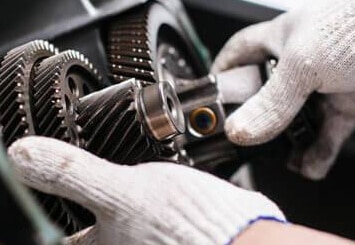
The evolution of transmissions has made these machines and systems increasingly complex. When transmission repairs are required, determining the cause and cure for what ails can be tricky.
Read More
At Mister Transmission we have access to leading-edge diagnostic equipment, enabling us to offer you the fastest and most accurate findings about what’s going on inside your vehicle’s transmission.
Read More
Just as you have other parts of your car serviced, your transmission needs maintenance to ensure a long life and avoid transmission problems.
Read More