

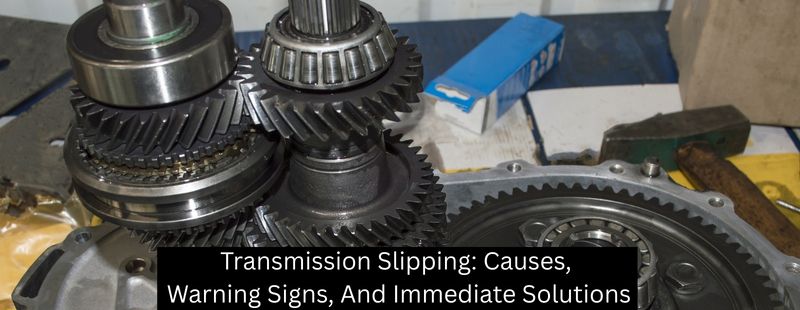
A slipping transmission is one of the most misunderstood — and most expensive to ignore — vehicle problems on Canadian roads. From commuters in Toronto and Ottawa to families driving the long stretches between Calgary and Edmonton, a transmission that hesitates, revs without accelerating, or unexpectedly drops out of gear is telling you that something is mechanically wrong. The longer it goes unaddressed, the worse the outcome. And in most cases, the drivers who act quickly walk away with far smaller repair bills than those who wait.
Your transmission is responsible for transferring engine power to your wheels at exactly the right gear ratio for your speed and load. When it slips, that power transfer becomes unreliable — and every additional kilometre you drive puts more stress on components that are already struggling. This guide covers what causes transmission slipping, the warning signs that matter most, and the steps to take right now. Whether you drive an automatic, manual, or CVT, Mister Transmission’s specialist network across Canada is ready to help you get the right answers quickly.
Fluid is the most frequent culprit. When it’s low — due to a leak — or degraded from overuse, hydraulic pressure drops and the clutch packs can’t engage reliably. A fluid check is always the first diagnostic step. In provinces like Saskatchewan and Manitoba, cold winters accelerate seal wear and leak development, making regular fluid inspections especially important for maintaining long-term transmission health.
In automatic transmissions, clutch packs and bands are what physically lock gear sets into place during shifting. When they wear down through normal use or overheating, the transmission slips out of ratio under load. A failing torque converter produces similar symptoms — shuddering and power loss during acceleration — and is frequently mistaken for internal transmission wear. Only an accurate, professional diagnosis separates one from the other.
Modern transmissions use electronic solenoids to control hydraulic fluid flow and execute gear shifts. A failed solenoid causes delayed, erratic, or missed shifts — all of which feel like slipping to the driver. Because solenoid faults register as stored diagnostic codes, an OBD scan can often pinpoint the exact component. Replacing one solenoid is far less involved than a full overhaul, which is precisely why getting a proper diagnosis early saves significant money.
Continuously Variable Transmissions are increasingly common in smaller cars and SUVs across Canada, from British Columbia to Nova Scotia. CVTs use a belt-and-pulley system instead of fixed gear steps. When the belt wears, drivers notice a distinct rubber-band sensation — the engine revs freely while the vehicle noticeably lags behind. CVT repairs require specialised training and dedicated tooling that many general repair shops simply don’t carry.
Whether you’re driving in Alberta or New Brunswick, these are the signals that a professional transmission assessment is needed right away — not a wait-and-see approach that lets minor issues compound into major ones.
The first thing to do is stop driving and hoping. Continuing to use a slipping transmission accelerates wear on components that are already compromised. A repair that might have been a fluid service or a solenoid swap can escalate into a full internal overhaul if driving continues. Check the fluid level and condition using the dipstick if your vehicle has one — clear red fluid at the correct level is a healthy sign, while dark, burnt-smelling fluid signals internal problems. Many newer vehicles don’t have an accessible dipstick and need a technician to inspect fluid properly on a lift.
Most importantly, take your vehicle to a transmission specialist — not just a general repair shop. Diagnosing transmission problems correctly requires dedicated expertise and professional diagnostic equipment. Mister Transmission offers a free Road Test and Multi-Check Inspection at locations across Canada. The inspection covers a visual check, fluid assessment, an OBD computer scan for stored fault codes, and a thorough road test evaluating every transmission position for slipping, harsh shifting, and erratic shift patterns. No repair work is ever authorised until the customer has reviewed and approved a full, clear estimate.
| Factor | What to Know |
| Most common cause | Low or degraded transmission fluid |
| Clearest warning sign | High RPMs without matching vehicle speed |
| Risk of ignoring it | Minor repair can escalate to a full overhaul |
| CVT-specific symptom | Rubber-band acceleration lag |
| Cold weather factor | Fluid thickens in winter; persistent slip signals a mechanical fault |
| First diagnostic step | OBD scan + road test + fluid inspection |
Discover how Mister Transmission’s free Road Test and Multi-Check Inspection helps drivers across Canada identify transmission problems early — at no charge and with no obligation to proceed.
Learn how Mister Transmission’s Technical Diagnostics service uses leading-edge equipment to deliver fast, accurate findings on what’s happening inside your vehicle’s transmission.
Find out how Mister Transmission’s Transmission Repair services cover everything from minor adjustments and re-seal jobs to complete overhauls, with flexible payment options for unexpected repairs.
It typically feels like the engine is revving higher than normal for your current speed — as though the gears aren’t fully engaging. You may also notice hesitation when pulling away from a stop, unexpected gear changes, or a shudder during acceleration. Any of these symptoms warrants a professional inspection rather than continued driving.
It’s not advisable. The longer a compromised transmission runs under load, the further the internal damage progresses. A solenoid replacement or fluid service can become a full internal overhaul if driving continues. Getting an inspection as soon as symptoms appear is always the smarter financial decision.
In Alberta, Manitoba, and Saskatchewan, extreme cold can temporarily thicken transmission fluid and cause sluggish engagement when first starting the vehicle. This typically clears as the engine warms up. If slipping continues after the vehicle reaches normal operating temperature, that points to a mechanical problem — not just a cold-weather fluid behaviour — and needs proper assessment.
The cost depends entirely on what’s causing the slip. A fluid service or solenoid replacement is far less expensive than a full rebuild. That’s why a proper diagnosis matters before any work is approved. Mister Transmission provides a free multi-check inspection and delivers a clear, itemised estimate upfront — and flexible payment options are available for unexpected repairs.
Mister Transmission has locations coast-to-coast — from British Columbia and Alberta through Ontario and Quebec to the Atlantic provinces. Use the location finder at mistertransmission.com to find the nearest centre. Every location offers the free Road Test and Multi-Check Inspection as the right starting point for any transmission concern.
Transmission slipping rarely improves on its own. Whether the root cause is a fluid issue, a failing solenoid, or internal clutch wear, the problem will continue to develop until it’s addressed by someone with the right expertise and equipment. Early action almost always means a more contained, less costly repair — and a vehicle that stays reliable for longer.
Since 1963, Mister Transmission has been the name Canadians trust for transmission repairs, with specialist locations serving drivers from British Columbia to Newfoundland and Labrador. The free Road Test and Multi-Check Inspection is the right first step — no obligation, just clear answers. Find your nearest location at mistertransmission.com.



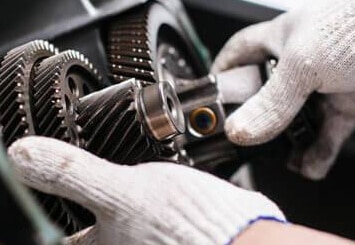
The evolution of transmissions has made these machines and systems increasingly complex. When transmission repairs are required, determining the cause and cure for what ails can be tricky.
Read More
At Mister Transmission we have access to leading-edge diagnostic equipment, enabling us to offer you the fastest and most accurate findings about what’s going on inside your vehicle’s transmission.
Read More
Just as you have other parts of your car serviced, your transmission needs maintenance to ensure a long life and avoid transmission problems.
Read More