

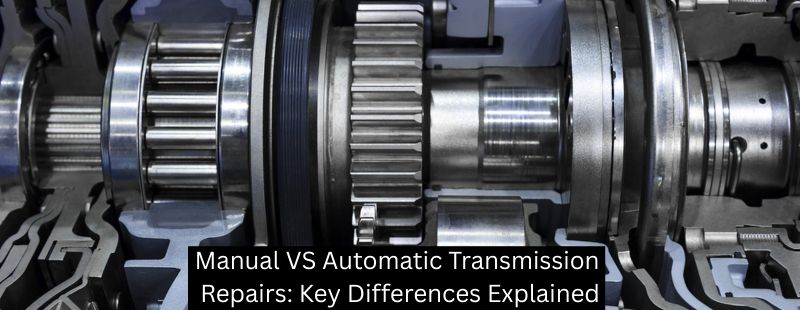
Your transmission is doing a lot of work every time you drive — shifting power, managing speed, and keeping your engine running in the right range. When something goes wrong, the repair path depends almost entirely on which type of transmission your vehicle has.
Manual and automatic transmissions are built differently, fail differently, and require different expertise to diagnose and fix. That’s a reality many drivers don’t fully appreciate until they’re already in the shop getting an estimate.
Across Canada — from British Columbia and Alberta in the west to Ontario, Quebec, and the Atlantic provinces in the east — drivers are navigating transmission issues every day. Some are dealing with slipping gears on an automatic pickup truck. Others are hearing grinding noises in a manual hatchback. Same symptom, very different root cause.
Before you can understand why repairs differ, it helps to understand what each system actually does.
A manual transmission relies on a clutch to transfer power from the engine to the gearbox. The driver controls gear selection directly, using a clutch pedal and gear lever. The system is largely mechanical — gears, shafts, bearings, and synchronizers working together in response to driver input.
An automatic transmission handles gear changes on its own, using a combination of hydraulic systems and computer-controlled components. There’s no clutch pedal. Instead, a torque converter manages the connection between the engine and transmission, while the vehicle’s electronics manage shift timing and pressure.
This fundamental difference in design is what makes repairs so distinct between the two.
In a manual transmission, the clutch is the most common source of problems. When the clutch wears down, drivers typically notice the engine revving without a corresponding increase in speed — what’s known as clutch slip. You might also feel difficulty engaging gears, or hear a grinding sound when shifting.
Clutch wear is normal over time. How quickly it happens depends on the driver’s habits, the vehicle type, and driving conditions. City driving in Manitoba or stop-and-go traffic in urban Ontario tends to wear a clutch faster than highway driving.
A worn clutch might only need an adjustment in mild cases. In more severe situations, the clutch disc, pressure plate, or release bearing will need to be replaced entirely.
Grinding when shifting is one of the clearest warning signs that a manual transmission needs attention. It usually points to worn synchronizers — the components responsible for matching gear speeds during a shift. Left unaddressed, synchronizer wear leads to harder shifts, gear damage, and eventually a transmission that won’t engage at all.
Noisy operation in neutral is another common complaint. If you hear a bumping or clanging sound when the vehicle is in neutral, it often indicates the transmission fluid is low or degraded and the internal components aren’t getting adequate lubrication.
Automatic transmissions are significantly more complex systems. They combine hydraulic circuits, solenoids, clutch packs, a torque converter, and increasingly sophisticated computer controls. When something goes wrong, pinpointing the actual cause requires proper diagnostic equipment — not just a visual inspection.
Common warning signs for automatic transmission problems include rough or hesitant shifts, transmission slipping between gears, fluid leaks, a burning smell, overheating, and an illuminated check engine light.
Each of these symptoms can point to different components. A burning smell usually indicates the transmission fluid is overheating or has broken down. Rough shifts often point to solenoid issues or low fluid pressure. A slipping transmission can mean anything from low fluid levels to a failing torque converter or worn clutch packs inside the transmission itself.
The interconnected nature of automatic transmission components means that a small problem left unaddressed tends to become a much larger one. A minor fluid leak, for instance, leads to reduced hydraulic pressure, which puts stress on other components, which accelerates wear across the system.
Catching automatic transmission problems early — ideally at the first sign of abnormal shifting or a warning light — is the single most effective way to keep repair costs manageable. That’s true whether you’re in British Columbia, New Brunswick, or anywhere in between.
Key Differences at a Glance
| Factor | What to Know |
| Primary Failure Points | Manual: clutch, synchronizers, gear oil. Automatic: solenoids, torque converter, clutch packs, fluid. |
| Diagnostic Approach | Manual repairs often start with mechanical inspection. Automatics require computerized diagnostic tools to read error codes and hydraulic data. |
| Repair Complexity | Automatic transmissions involve more components and typically require more labour time to access and repair. |
| Fluid Requirements | Manual transmissions use gear oil. Automatics use specialized transmission fluid that is more sensitive to degradation and contamination. |
| Maintenance Intervals | Both types require periodic fluid service. Automatics generally require more frequent monitoring due to hydraulic system sensitivity. |
| Warning Signs | Manual: clutch slip, grinding shifts, neutral noise. Automatic: rough shifts, fluid leaks, burning smell, check engine light. |
One thing that holds true for both transmission types: an accurate diagnosis before any work begins is what separates a cost-effective repair from an expensive guessing game.
At Mister Transmission, every vehicle starts with a FREE Road Test and Multi-Check inspection. This initial assessment identifies what’s actually happening with the transmission before any repair decisions are made. For automatic transmissions in particular, state-of-the-art diagnostic equipment is used to read computer data, check hydraulic pressure, and identify exactly which components are responsible for the problem.
This approach consistently finds that many transmission issues — both manual and automatic — require only a minor repair or fluid service when caught early. The drivers who come in at the first sign of trouble are almost always looking at a smaller job than those who wait.
Automatic transmission repairs tend to cost more on average because the system is more complex, involves more components, and requires advanced diagnostic equipment to assess properly. Manual transmission repairs — particularly clutch work — can be straightforward and relatively affordable when caught early. In both cases, the final cost depends heavily on what specific component has failed and how long the problem has been developing.
The most common signs are clutch slip (where the engine revs but the car doesn’t accelerate normally), difficulty getting the vehicle into gear, grinding when shifting, and a clutch pedal that feels soft or sits very low. Sometimes only an adjustment is needed. Other times the clutch disc, pressure plate, or release bearing requires replacement. A road test and mechanical inspection will determine which it is.
Transmission slipping in an automatic is usually caused by low or degraded transmission fluid, worn clutch packs inside the transmission, or a failing torque converter. It can also be triggered by faulty solenoids that regulate hydraulic pressure and gear engagement. Slipping should always be diagnosed promptly — continued driving in this condition accelerates internal wear significantly.
There’s no universal answer — it depends on your vehicle’s make, model, year, and how it’s driven. Automatic transmissions are particularly sensitive to fluid quality, and the interval is often shorter for vehicles used in demanding conditions. Manual transmission gear oil also degrades over time, especially in colder climates. The safest approach is to consult your local Mister Transmission location for guidance specific to your vehicle.
Manual and automatic transmissions share one important thing: they both give you warning signs before a small problem becomes a serious one. The key is knowing what to listen for — and acting on it.
Manual transmissions tend to fail mechanically, with clutch wear and synchronizer issues leading the list. Automatic transmissions fail through a combination of hydraulic, electronic, and mechanical factors that require proper diagnostics to sort out accurately.
Since 1963, Mister Transmission has been the name Canadians trust for transmission service and repair on every type of system. With coast-to-coast locations, state-of-the-art diagnostic technology, and a free Road Test and Multi-Check inspection for every vehicle, Mister Transmission gives drivers an honest assessment — and the right repair — wherever they are in Canada.



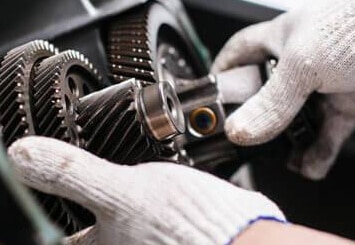
The evolution of transmissions has made these machines and systems increasingly complex. When transmission repairs are required, determining the cause and cure for what ails can be tricky.
Read More
At Mister Transmission we have access to leading-edge diagnostic equipment, enabling us to offer you the fastest and most accurate findings about what’s going on inside your vehicle’s transmission.
Read More
Just as you have other parts of your car serviced, your transmission needs maintenance to ensure a long life and avoid transmission problems.
Read More