

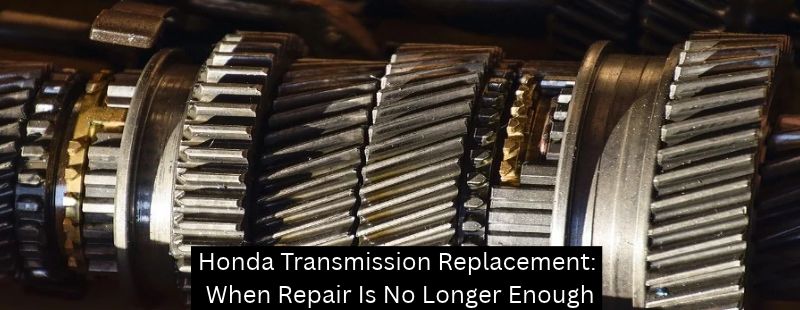
A Honda transmission needs replacement when the internal damage is too widespread to repair reliably. Common signs include severe slipping, metal particles in the fluid, no movement in any gear, repeated failures after previous repairs, and a diagnostic result showing major internal wear. Replacement is not the first answer, but when repair is no longer enough, it is the safest way to get your Honda back on the road with confidence.
Most transmission problems are caught early enough to repair. A worn solenoid, a leaking seal, degraded fluid, or a sensor fault can often be corrected without touching the rest of the unit. A good technician will always look at the less involved options first. Replacement comes into the conversation only when the damage goes beyond what a repair can reliably fix.
Honda transmissions are known for longevity, so many owners never face this decision. But when a Honda has covered a lot of kilometers, been driven with neglected fluid, or run hot for long periods, internal wear can reach the point where replacement makes the most sense.
Occasional flaring can come from fluid trouble. Constant slipping in multiple gears, or a vehicle that struggles to move at all, usually points to burned clutch packs or widespread internal wear.
A fine film of material on the dipstick or in the pan is normal wear. Visible metal flakes, glittery fluid, or thick dark sludge are signs that internal parts are breaking down.
If the engine runs but the vehicle will not move in a gear, the problem is often internal. In some cases it is a simple fix, but a complete loss of drive can also mean serious internal failure.
Grinding while shifting or loud mechanical noises under load suggest worn gears, bearings, or other major components.
Fluid that smells burnt and looks dark has been overheated and has likely caused wear to the clutches and seals.
If the same symptoms return after previous work, the underlying damage may be more extensive than it first appeared.
A full inspection can reveal damage that cannot be corrected with a repair, and that is when replacement becomes the practical path.
When replacement is the right decision, there are generally a few routes a specialist may discuss:
Each option has different advantages in reliability, warranty coverage, and availability for your Honda model. A transparent shop will explain them clearly and recommend the one that fits your situation.
Fall is when a weak transmission often starts to show its age. Cold mornings thicken the fluid, stiffen seals, and increase the load on every shift, and a Honda that coped through the summer can struggle once temperatures drop. Long weekend and fall-colour trips keep a loaded vehicle working on long highway stretches, and a worn transmission may fail suddenly, far from home.
If your Honda has shown signs of serious internal wear, it is safer to deal with it before winter arrives. A planned replacement is far easier to manage than a roadside breakdown with passengers, luggage, and the first snow on the way. Cold also makes a damaged transmission more likely to show its problems, so a Honda that seemed borderline in early fall may be clearly failing once winter sets in.
While each shop’s process varies, the general steps are consistent:
A good shop also looks at the reason the original failed, so the same problem does not repeat.
Replacement is a major service, and the quality of the work matters as much as the unit itself. A specialist knows how to match the right transmission to your Honda, how to install it correctly, and how to verify that it works properly. Mister Transmission starts every conversation with a free Road Test and Multi-Check, combined with advanced diagnostic technology, so the recommendation is based on what is actually happening in your vehicle, not a guess.
Replacement is a significant decision, and you have every right to understand it fully before you say yes. A trustworthy shop will welcome these questions:
The answers tell you a lot about the shop. Clear, specific answers are a good sign, while vague replies or pressure to decide on the spot are reasons to slow down. With colder mornings and holiday travel plans on the way, it is sensible to make this decision calmly now rather than under pressure later.
Only a proper diagnosis can tell. Widespread internal wear, metal debris, and complete loss of drive suggest replacement, while many other issues can be repaired.
It depends on the vehicle and the unit, but it is typically a matter of days rather than hours. Your technician can give you a clear timeline after diagnosis.
At Mister Transmission, work is backed by Canada’s Best Warranty, honoured at any location nationwide.
A well-built remanufactured unit is restored to precise specifications with worn parts replaced and then tested. Quality varies between suppliers, so ask where the unit comes from and what warranty covers it.
It depends on the symptoms. If the vehicle slips badly, will not engage a gear, or is in limp mode, driving can cause more damage and may be unsafe. Ask the shop whether towing is the better choice.
Replacement is a big decision, and you should make it with a clear diagnosis in hand. If your Honda is showing serious transmission trouble, call 800-373-8432 and let Mister Transmission give you a free Road Test and Multi-Check first. Then you can decide with confidence.



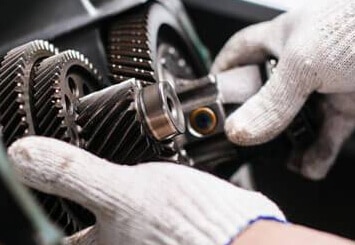
The evolution of transmissions has made these machines and systems increasingly complex. When transmission repairs are required, determining the cause and cure for what ails can be tricky.
Read More
At Mister Transmission we have access to leading-edge diagnostic equipment, enabling us to offer you the fastest and most accurate findings about what’s going on inside your vehicle’s transmission.
Read More
Just as you have other parts of your car serviced, your transmission needs maintenance to ensure a long life and avoid transmission problems.
Read More