

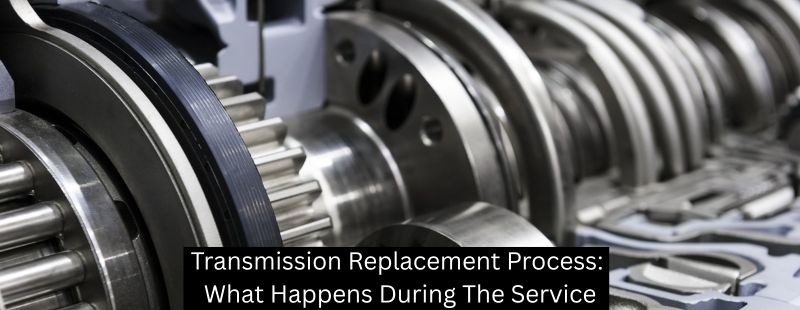
During a transmission replacement, the shop diagnoses the failure, removes your old transmission, installs a new or remanufactured unit, refills it with the correct fluid, and road-tests the vehicle to confirm everything works. It is a major service, but a well-run process is methodical and predictable. Here is exactly what happens, step by step, so you know what to expect.
A transmission replacement removes your existing transmission and installs a different unit in its place, usually remanufactured or new. Unlike a repair, which fixes a specific part, or a rebuild, which reconditions your existing unit, a replacement gives you a different transmission altogether.
It is one of the most significant services a vehicle can need, which is why a good shop only recommends it after confirming it is truly necessary, and why the process is handled carefully from start to finish.
Before anything is removed, the technician confirms that replacement is genuinely the right answer. This means a road test, a scan for trouble codes, a fluid and component inspection, and a careful look at whether a repair or rebuild might solve the problem instead.
This step protects you. Replacement is a major job, and you want to be certain it is needed before committing. A trustworthy shop will tell you honestly if you need less than a full replacement. Mister Transmission customers often arrive expecting a replacement and learn a smaller repair will do, which is exactly why the diagnosis comes first.
Once replacement is confirmed, you and the shop decide on the right unit for your vehicle. The options are generally:
• A remanufactured unit, rebuilt to a high standard with worn parts replaced, offering a strong balance of reliability and value
• A new unit, the most expensive option and sometimes the only choice for certain vehicles
• A used unit, the cheapest but riskiest, since it carries another vehicle’s wear
For most drivers, a quality remanufactured unit backed by a solid warranty is the sensible choice. The shop should explain the options, the cost, and the warranty before any work begins, so you know exactly what you are getting.
With the unit chosen, the technician removes your failed transmission. This involves lifting the vehicle, disconnecting the transmission from the engine and drivetrain, detaching the related lines, sensors, and mounts, and carefully extracting the unit.
This is labour-intensive work, and the amount of labour depends on the vehicle, since some transmissions are far more accessible than others. This is part of why replacement costs vary so much between vehicles.
The new or remanufactured transmission is then installed. The technician fits the unit, reconnects it to the engine and drivetrain, and reattaches the lines, sensors, mounts, and electrical connections. Everything that was disconnected during removal is carefully reconnected and secured.
Precision matters here. A transmission has to be installed correctly to perform reliably, which is one more reason this work belongs with specialists rather than a general shop attempting it occasionally.
The transmission is filled with the correct fluid for your vehicle, and related components are checked. Depending on the situation, this can include inspecting or replacing parts that work with the transmission, such as the cooler lines or other connected components, so the new unit is not put at risk by an old problem.
Using the right fluid is essential, since modern transmissions require specific fluids. A specialist ensures the correct type and the proper fill, which protects the new unit from the start.
Finally, the vehicle is road-tested. The technician confirms the transmission shifts smoothly, engages properly, and operates at the right temperature, and checks for any leaks. This is where the shop verifies that the replacement was successful before handing the vehicle back to you.
A proper test drive is not optional in good work. It is how the shop confirms the job is done right and how you get the peace of mind that comes with a transmission that drives the way it should.
It varies by vehicle and the availability of the replacement unit. Some replacements are completed in a couple of days, while others take longer, depending on how complex the vehicle is and whether the unit is in stock. Because it is a major service, it helps to plan for the vehicle to be in the shop for a few days, and a reputable shop keeps you informed of the timeline and any changes.
A replacement is a significant investment, so it makes sense to protect it. Caring for a new or remanufactured transmission is straightforward, and it is the same care that would have helped your old one last:
• Keep the fluid fresh by following your owner’s manual service intervals
• Avoid overheating the transmission, especially when towing or hauling
• Address any new symptom early rather than waiting
• Have the transmission checked periodically, which a free Road Test and Multi-Check makes easy
A replacement is a significant investment, so the protection behind it is a major part of the value. A strong, nationwide warranty means that if anything goes wrong, you are covered, and it reflects the shop’s confidence in its own work.
This is a real advantage with Mister Transmission, where replacements are backed by Canada’s Best Warranty, honoured at any location across the country. A replacement done in one city is protected wherever you drive, exactly the assurance you want on a service this important.
For a major service like a replacement, drivers across the country choose Mister Transmission for:
• Transmission specialists since 1963, the largest such chain in Canada
• A free Road Test and Multi-Check and advanced diagnostics, so replacement is recommended only when truly needed
• Quality remanufactured and new units, properly installed
• Canada’s Best Warranty, honoured nationwide
• A 4.8 out of 5 rating from more than 14,000 reviews
• A flexible payment plan to ease the cost
If you tow or take long road trips in summer, timing matters. A failing transmission will not get better under the load of a boat, seadoos, or a trailer, and summer heat only adds to the strain. Towing with a transmission on its way out is how people end up stranded on the highway, far from home, with the boat still attached. If a replacement is in your future, handling it before towing season means you head into summer with a fresh, reliable unit that can take the heat and the load. It is far better to plan the work than to have it forced on you mid-trip.
It depends on the vehicle and unit availability, often a few days. The shop can give a timeline once the unit is chosen.
A good shop diagnoses first and only recommends replacement when it is genuinely necessary, sometimes finding a smaller repair will do.
A transmission replacement is a big service, but with the right shop it is a clear, careful process from diagnosis to road test. Find your nearest Mister Transmission location or call 1-800-373-8432 for a free Road Test and Multi-Check, and get an honest assessment and a properly handled replacement if you need one.



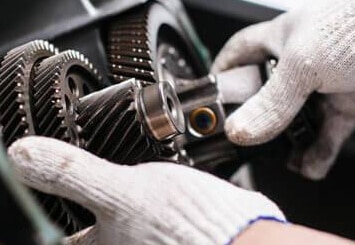
The evolution of transmissions has made these machines and systems increasingly complex. When transmission repairs are required, determining the cause and cure for what ails can be tricky.
Read More
At Mister Transmission we have access to leading-edge diagnostic equipment, enabling us to offer you the fastest and most accurate findings about what’s going on inside your vehicle’s transmission.
Read More
Just as you have other parts of your car serviced, your transmission needs maintenance to ensure a long life and avoid transmission problems.
Read More