

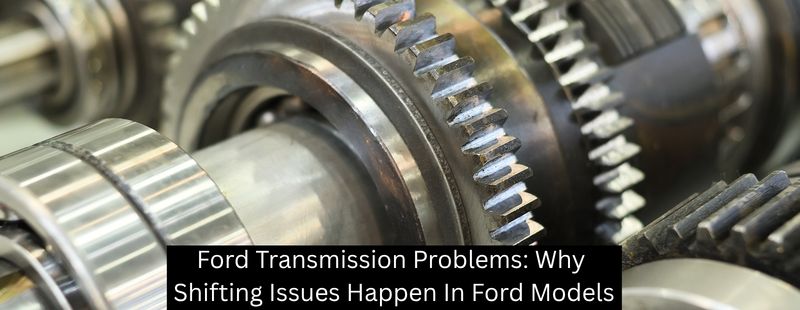
Shifting issues in Ford models usually happen because of worn or degraded fluid, overheating, worn clutches, faulty solenoids or sensors, or software and control faults. The symptoms show up as harsh shifts, delayed engagement, hesitation, shuddering, or the transmission hunting for the right gear. Understanding why they happen helps you act early and avoid a bigger failure.
Ford builds a very wide range of vehicles, from compact cars and crossovers to full-size pickups and commercial vans. Behind them sit different transmission designs: conventional six-speed automatics, newer ten-speed units in trucks and SUVs, and dual-clutch automatics that appeared in some compact cars in the 2010s. Each design has its own strengths and its own habits.
Because the designs vary so much, the same symptom can mean different things on different models. A hesitation in a dual-clutch compact car is not necessarily the same problem as a rough shift in a half-ton truck. That is why understanding the cause, not just the symptom, matters.
A bang or jolt when the transmission changes gears is a common complaint on Ford trucks and SUVs. It can point to fluid that has degraded, a solenoid that is not controlling pressure properly, or software that needs attention.
A pause before the vehicle moves after you select drive or reverse often indicates low fluid pressure or worn internal parts. It is an early sign that deserves attention.
Owners of some Ford compacts with dual-clutch transmissions have reported shuddering when pulling away and hesitation under light throttle. The cause is often related to clutch engagement or control behaviour in that design.
If the transmission keeps shifting up and down on a gentle hill or at steady speed, it may be struggling to decide which gear to hold. With many gears to choose from, a sensor or control fault can cause noticeable hunting.
The engine revs, but the vehicle does not respond. Slipping points to worn internal components or fluid trouble and tends to get worse.
Of all these, fluid and heat are the most consistent factors. A Ford transmission with clean fluid that stays cool typically shifts smoothly for much longer.
Fall brings the first real cold mornings, and cold exposes shifting problems that warm weather hides. Transmission fluid thickens as temperatures drop, so a Ford may shift harshly, hesitate, or hold a gear longer on a cold start. Some of this settles as the fluid warms up. What does not settle is a rough shift that continues after fifteen or twenty minutes of driving, or one that gets worse with each cold morning.
Fall use adds load. Pickups, Explorers, and Escapes are packed for long weekend trips and fall-colour drives, and many are hauling boats, seadoos, or campers to storage. Wet leaves, rain, and the first frost make stop-and-go driving more demanding too. If your Ford starts shifting roughly, slipping, or hesitating this fall, avoid heavy acceleration and towing, and get it checked before the snow arrives.
Get a proper diagnosis. Note when it happens: cold or warm, in a specific gear, under load, or while towing. Avoid heavy acceleration and towing until it has been checked. Do not rely on additives, which rarely solve a mechanical problem.
A harsh shift can come from something simple, like worn fluid, or something serious inside the unit. A guess can lead to the wrong repair. Mister Transmission offers a free Road Test and Multi-Check, backed by advanced diagnostic technology, so technicians can read fault codes, inspect the fluid, and confirm what is actually going on before any work begins.
Ford has used several transmission designs, and each one shows trouble in its own way. Knowing which type your vehicle has helps you understand what the symptoms might mean:
Because of these differences, the same symptom can mean different things on different Fords. That is why a technician who works on transmissions every day, and who understands each design, is worth choosing. As the mornings get colder, a few minutes of observation tells you a lot about what your particular Ford is doing.
Common causes include worn fluid, a faulty solenoid, or a software or sensor issue. A diagnostic scan and road test will narrow it down.
Sometimes. Some issues are related to control software, but many shifting problems involve fluid or mechanical wear, so a proper diagnosis comes first.
It is not recommended. Rough shifting often worsens and can lead to more damage or a breakdown.
Hesitation can come from worn fluid, a clutch that is not engaging smoothly, a sensor fault, or internal wear. Because the causes overlap, a road test and a diagnostic scan are the best way to find the real one.
Cold does not usually damage a healthy transmission, but it thickens the fluid and can expose existing weaknesses. A problem that appears on cold mornings is worth checking before it gets worse.
Ford transmissions rarely fail without warning. If your Ford is shifting harshly, hesitating, or hunting for gears, call Mister Transmission at 800-373-8432 and book a free Road Test and Multi-Check. Finding the cause early gives you more options.



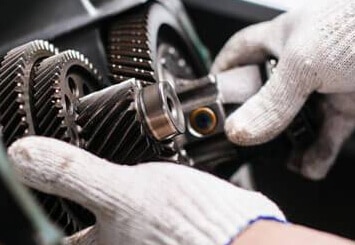
The evolution of transmissions has made these machines and systems increasingly complex. When transmission repairs are required, determining the cause and cure for what ails can be tricky.
Read More
At Mister Transmission we have access to leading-edge diagnostic equipment, enabling us to offer you the fastest and most accurate findings about what’s going on inside your vehicle’s transmission.
Read More
Just as you have other parts of your car serviced, your transmission needs maintenance to ensure a long life and avoid transmission problems.
Read More