

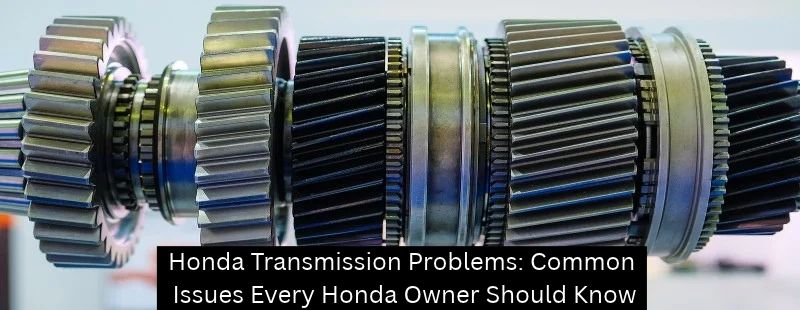
The most common Honda transmission problems are slipping or flaring between gears, harsh or delayed shifts, a shudder at low speed, whining or droning noises, and a transmission or check engine warning light. Honda builds dependable vehicles, but its automatic and CVT transmissions are precisely engineered and do not forgive neglected fluid or constant heat. Here is what Honda owners should watch for, why these problems happen, and what to do about them.
Honda transmissions are known for smooth, efficient performance, and many owners drive them well past 200,000 kilometers. That reputation is earned, but it comes with a catch. Honda automatics and CVTs are built to tight tolerances and are designed around Honda’s own transmission fluid. Using the wrong fluid, or leaving the original fluid in far too long, is one of the most common reasons trouble starts.
The good news is that Honda transmissions usually give clear warnings before a serious failure. Owners who learn those signs and act early almost always get a better outcome than those who keep driving and hope the problem goes away.
If the engine revs up but the car does not accelerate the way it should, or the revs jump between shifts, the transmission is slipping or flaring. This often points to worn clutch packs, low fluid, or degraded fluid that can no longer grip properly. Slipping rarely fixes itself and tends to get worse with every drive.
A healthy Honda shifts quietly and on time. A bang or clunk when changing gears, a pause before the car engages in drive or reverse, or a lurch between second and third gear are all signs that something has changed. Some Honda automatics from the early 2000s became known for trouble in particular gears, so a change in how a specific gear feels is worth taking seriously.
A shake or vibration when pulling away, or at steady low speeds, is a common complaint on both conventional automatics and CVTs. It can come from fluid that has broken down, a torque converter that is not locking up cleanly, or internal wear. It is easy to mistake for an engine misfire, which is why a proper road test matters.
A steady whine that rises and falls with engine speed, or a droning hum from a CVT, can signal worn internal parts or low fluid. New noises are the vehicle telling you something has changed.
A transmission warning light, a flashing D indicator, or a check engine light means the car has stored a fault code. Some vehicles also drop into a protective limp mode, locking into a single gear to prevent damage. When that happens, the car is asking for help.
Most Honda transmission problems trace back to a short list of causes:
Heat and fluid are the recurring themes. A Honda transmission that runs cool with fresh, correct fluid lasts dramatically longer than one that does not.
September looks easy on a vehicle, but it is a demanding month. Summer heat has not fully left, so the fluid is still working hard, and then cooler nights arrive and the transmission has to cope with big swings between cold mornings and warm afternoons. Back-to-school traffic means more stop-and-go driving, and a Honda that spent the summer on road trips may be carrying fluid that is already worn. If shifts feel slow, harsh, or hesitant, this is a good time to catch it.
Stop guessing and get a proper diagnosis. Honda transmission symptoms overlap, and the same sign can have several causes, from a simple fluid issue to an internal failure. Driving on a failing transmission usually makes the damage worse, and it can be unsafe if the car shifts unpredictably in traffic.
A good first step is to note exactly when it happens: cold or warm, a certain gear, or only under load. That detail helps a technician narrow the cause quickly. Avoid adding random additives, and do not top up with a fluid you are not sure is correct for your model.
Prevention is simpler than most owners expect, and it starts with habits rather than repairs. A few steps make a real difference to how long a Honda transmission lasts:
September is a natural checkpoint. After a summer of road trips, heavy loads, and hot weather, the fluid has done a lot of work. A quick inspection now tells you whether the transmission is ready for the cooler months ahead, and it costs far less time and stress than a breakdown later.
Slipping, flaring, and harsh shifting are among the most reported. They usually trace back to worn or degraded fluid, worn clutch packs, or a failing component.
It is not recommended. Slipping usually worsens, can leave you stranded, and often turns a smaller repair into a larger one.
Yes. Honda transmissions are designed around Honda-specific fluid, and using the wrong type can affect shifting and wear. Always check your owner’s manual or ask a specialist.
The right interval depends on the model, the transmission type, and how the vehicle is driven. Towing, heavy loads, and constant stop-and-go driving usually call for earlier service than the manual’s baseline, so a specialist can help you choose a sensible schedule.
Not inherently. CVTs are simply more sensitive to fluid condition and heat, so regular service matters more. A shudder, a whine, or hesitation when pulling away is worth having checked early.
Honda transmissions reward owners who act early. If your Honda is slipping, shifting hard, shuddering, or showing a warning light, find your nearest Mister Transmission location or call 800-373-8432 for a free Road Test and Multi-Check, and get a clear answer before the problem grows.



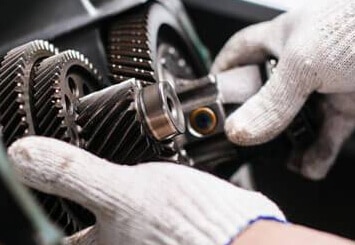
The evolution of transmissions has made these machines and systems increasingly complex. When transmission repairs are required, determining the cause and cure for what ails can be tricky.
Read More
At Mister Transmission we have access to leading-edge diagnostic equipment, enabling us to offer you the fastest and most accurate findings about what’s going on inside your vehicle’s transmission.
Read More
Just as you have other parts of your car serviced, your transmission needs maintenance to ensure a long life and avoid transmission problems.
Read More