


The automatic transmission is one of the most complex and expensive components in any vehicle. When it starts to fail, it rarely happens without warning — but those early warnings are easy to miss if you don’t know what to look for.
Across Canada, from British Columbia to Nova Scotia, drivers deal with transmission issues that start small and grow into significant mechanical failures. A minor fluid leak or a slight hesitation when shifting gears might seem like nothing worth worrying about today. Weeks later, that same vehicle could be facing a full rebuild.
The difference between a manageable repair and a major overhaul almost always comes down to timing. Drivers who catch problems early — and get them assessed by transmission specialists — consistently pay far less and face far less downtime.
Automatic transmissions communicate distress in several recognizable ways. Knowing what each signal means puts you in a much stronger position when deciding whether to book an inspection.
If your vehicle revs up but doesn’t accelerate proportionally, or if there’s a noticeable pause before the car moves after shifting into Drive or Reverse, your transmission may be slipping. This often points to low fluid levels, worn clutch packs, or a failing torque converter.
Slipping is one of the earlier warning signs — it typically appears before any major internal damage has occurred. Addressing it at this stage is considerably less expensive than waiting.
Automatic transmissions are designed to shift smoothly under normal driving conditions. When shifts become harsh, jerky, or unpredictable — especially between lower gears — something is off. This can stem from contaminated fluid, worn solenoids, or software-related issues in computer-controlled systems.
Drivers in Quebec and Manitoba who navigate frequent stop-and-go traffic often notice erratic shifting before those driving longer highway stretches, simply because the transmission cycles through gears more frequently.
Transmission fluid is the lifeblood of your automatic transmission. It lubricates, cools, and provides the hydraulic pressure necessary for gear changes. Healthy fluid is typically bright red and has a slightly sweet smell. Dark brown or black fluid — or fluid with a burnt odour — signals oxidation and contamination.
If you notice red or brown spots on your driveway, don’t assume it’s minor. Even a slow leak reduces fluid volume and pressure, both of which directly affect transmission performance.
Transmission overheating is a serious condition that accelerates internal wear. It’s often caused by towing beyond the vehicle’s rated capacity, low fluid levels, or a failing transmission cooler. Some vehicles will display a warning light; others won’t give any visible indication until damage is already underway.
In Saskatchewan and Alberta, extreme temperature swings — from summer heat to deep winter cold — place additional thermal stress on transmission components. Regular fluid checks are especially important in these conditions.
A burning smell from beneath your vehicle, particularly after highway driving or after towing, often indicates that transmission fluid is overheating. Once fluid breaks down from excessive heat, it loses its protective properties and the damage compounds quickly.
The Check Engine light doesn’t always mean engine trouble. Transmission-related fault codes — including issues with shift solenoids, speed sensors, and transmission control modules — trigger the same warning light. Without a proper diagnostic scan, there’s no way to know which system has flagged the issue.
There’s a predictable pattern in transmission repairs: the longer a problem goes unaddressed, the more systems it affects. What begins as a worn seal leads to fluid loss. Fluid loss causes pressure drops. Pressure drops accelerate clutch wear. Clutch wear generates metal debris. Metal debris contaminates the remaining fluid and scores internal components.
A seal replacement might cost a few hundred dollars. A full transmission rebuild — the outcome of ignoring that seal — is a very different conversation. Early intervention consistently produces better outcomes, both mechanically and financially.
This isn’t speculation. It’s the pattern Mister Transmission technicians see regularly: drivers who come in when they first notice something unusual almost always leave with a simpler, lower-cost repair than those who waited for the problem to become undeniable.
Not all inspections are equal. A thorough transmission assessment goes well beyond a visual check under the hood.
At Mister Transmission, every vehicle starts with a FREE Road Test and Multi-Check Inspection. This process evaluates how the transmission performs under real driving conditions, checks fluid level and condition, and screens for any active fault codes. From there, technicians identify the most cost-effective repair path — whether that’s a fluid service, a minor repair, or a more involved fix.
The diagnostic equipment used matters considerably here. Modern automatic transmissions combine hydraulic systems with computer-controlled components, which means accurate diagnosis requires both mechanical expertise and technology capable of reading transmission control data. Mister Transmission uses state-of-the-art diagnostic technology to determine exactly what is happening inside your transmission — and just as importantly, what isn’t.
This approach prevents unnecessary work. A proper diagnosis means you’re only paying for what the vehicle actually needs — not for a repair that addresses a symptom while missing the root cause.
Discover how Mister Transmission’s Technical Diagnostics service gives drivers accurate, evidence-based repair options — using leading-edge diagnostic equipment across locations nationwide.
Find out how Mister Transmission’s Transmission Maintenance & Service program helps vehicles across Canada stay ahead of costly failures through regular, scheduled upkeep.
Learn how Mister Transmission’s Fleet Services supports businesses managing multiple vehicles in Ontario, British Columbia, and across the country.
The earliest signs typically include transmission slipping (revving without proportional acceleration), delayed engagement when shifting into Drive or Reverse, and rough or hesitant gear changes. Dark or burnt-smelling transmission fluid is another early indicator. If you notice any of these, bringing the vehicle in for an inspection before symptoms worsen is strongly advisable.
Repair costs vary widely depending on what the diagnosis reveals. Minor repairs such as a fluid service or solenoid replacement are significantly less expensive than a full rebuild. The key factor is how early the problem is caught. Mister Transmission’s free Road Test and Multi-Check Inspection gives you an accurate picture of what’s actually needed — without unnecessary guesswork.
Driving with a slipping transmission is not recommended. Continued driving accelerates internal wear and can turn a manageable repair into a much larger one. If your transmission is slipping, have it assessed as soon as possible. Mister Transmission locations across Canada offer assessments in most cases without a long wait.
Manufacturer recommendations vary, but many industry professionals suggest a fluid inspection every 50,000–80,000 km for most vehicles under normal driving conditions. Vehicles used for towing, operating in extreme temperatures (common in Alberta and Saskatchewan), or driven in heavy stop-and-go traffic may need more frequent service. Your Mister Transmission technician can advise based on your specific vehicle and driving patterns.
Automatic transmission problems don’t announce themselves loudly — they start quietly, with small signs that are easy to overlook. Slipping gears, rough shifts, and fluid discolouration are your transmission’s way of asking for attention before things get serious.
For drivers across Canada — from New Brunswick to British Columbia — the most effective strategy is consistent: notice the early signs, get a professional assessment quickly, and make decisions based on accurate diagnosis rather than assumption.
Mister Transmission has been Canada’s trusted transmission specialist since 1963, with locations coast-to-coast and a 4.8-star rating backed by over 14,000 customer reviews. Every visit starts with a FREE Road Test and Multi-Check Inspection — because understanding the problem clearly is always the first step to fixing it properly.



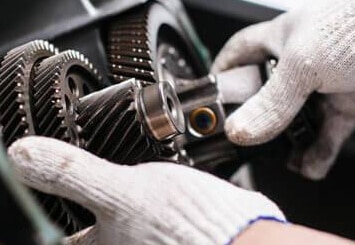
The evolution of transmissions has made these machines and systems increasingly complex. When transmission repairs are required, determining the cause and cure for what ails can be tricky.
Read More
At Mister Transmission we have access to leading-edge diagnostic equipment, enabling us to offer you the fastest and most accurate findings about what’s going on inside your vehicle’s transmission.
Read More
Just as you have other parts of your car serviced, your transmission needs maintenance to ensure a long life and avoid transmission problems.
Read More